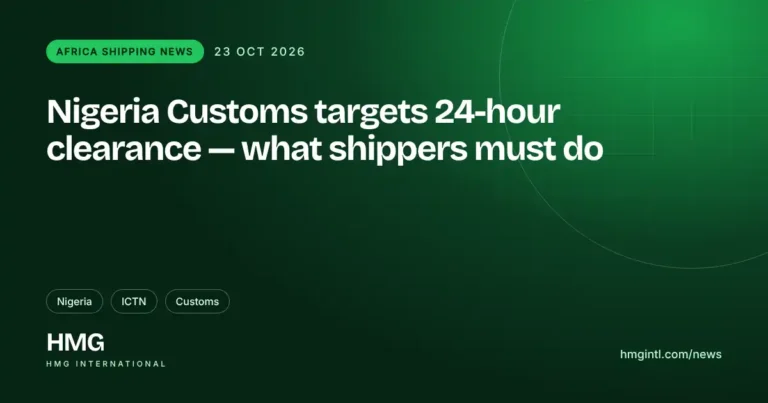































“The Customs will pursue the target through compliance, data and facilitation, not through harassment at the ports.”
— Bashir Adewale Adeniyi, Comptroller-General, Nigeria Customs Service, as reported by The Guardian Nigeria
What happened
Nigeria Customs Service (NCS) chief Bashir Adewale Adeniyi set out how the service plans to raise revenue and move cargo faster in a lecture at the University of Ibadan on Tuesday, 20 October. According to reports in The Guardian Nigeria and Vanguard, the service is chasing a ₦11.07 trillion revenue target for 2026 and had collected about ₦4.03 trillion in the first half of the year. Adeniyi also called for a review of import duty waivers worth about ₦1.68 trillion granted in 2024, to test whether they deliver their economic goals.
On clearance times, Vanguard reported that a study at Tin Can Island Port found cargo release took almost five days on average, with more than 90% of that time spent waiting. Customs is aiming for 24-hour clearance in the long term, with an interim target of two days and scanning for 99% of cargo. The report also noted that the National Single Window went live on 27 March 2026, that the B’Odogwu clearance platform handled about 16,000 entries in its first three months at the Port and Terminal Multi-services Limited (PTML) Command, and that 51 Authorised Economic Operator companies cut clearance time from 168 hours to 41 hours.
At port level, the PTML Customs Command has issued new directives to licensed customs agents, The Guardian Nigeria reported on 21 October. Changing the chassis numbers of imported vehicles is prohibited, agents must confirm where a consignment is located before assessment, and the same agency name must be used on clearance paperwork from registration through to final delivery. The command warned that non-compliance could bring serious operational and financial consequences.
What this means for shippers
For exporters and forwarders shipping to Nigeria, the message is that faster clearance will be earned through clean data. As customs leans on the single window, digital platforms and risk-based scanning, any mismatch between the commercial invoice, packing list, bill of lading and the cargo tracking note becomes easier to spot and harder to fix at the port. If release already takes around five days at a busy terminal, a query over inconsistent documents can quickly add storage and demurrage costs for the importer.
Vehicle shippers in particular should take the PTML directive seriously. Make sure the chassis number (VIN) is identical on the invoice, bill of lading and every other document, and never ship a unit whose identification has been altered. Importers should also agree with their clearing agent early, because the same agency name must now run through the whole clearance file.
The cargo tracking note remains a pre-loading step. Containerised cargo for Nigeria needs an ICTN obtained at the port of loading before the ship sails, and its details should match the final bill of lading. If your booking changes vessel or voyage, update the documents before departure. Our Nigeria ICTN guide lists the documents needed, and if you have cargo loading for Apapa, Tin Can Island or Onne, contact HMG and we will help you get the paperwork right before loading.
Key points
- Nigeria Customs is pursuing a ₦11.07 trillion revenue target for 2026 and says it will do so through compliance, data and facilitation.
- A Tin Can Island Port study found cargo release took almost five days on average; customs is aiming for two days in the interim and 24 hours long term.
- The PTML Customs Command has banned chassis number alteration on imported vehicles and set new rules for agents on cargo location and agency naming.
- The Comptroller-General has called for a review of import duty waivers worth about ₦1.68 trillion granted in 2024.
Frequently asked questions
How long does cargo clearance take at Nigerian ports?
According to a study at Tin Can Island Port cited by Vanguard, cargo release took almost five days on average, mostly waiting time. Nigeria Customs aims to bring this down to two days in the interim and 24 hours in the long term.
What did the PTML Customs Command change for vehicle imports?
It prohibited any alteration of imported vehicles’ chassis numbers, told agents to confirm a consignment’s location before assessment, and required the same agency name on all clearance documents through to delivery.
Do I need a cargo tracking note to ship containers to Nigeria?
Yes. Containerised cargo for Nigeria needs an International Cargo Tracking Note (ICTN), obtained at the port of loading before the cargo ships. Its details should match the final bill of lading.